Clinical Outcomes of a New Solid-State 1550/1927 nm Dual-Wavelength Fractional Laser Featuring Disposable-Free Design and Customizable Delivery Patterns: A Retrospective Case Series
Keywords:
solid-state fractional laser, 1550/1927 nm, customizable scan pattern, acne scarring, photoaging, pigmentationAbstract
Background:
Dual-wavelength fractional lasers (1550 nm non-ablative and 1927 nm resurfacing) are well established for rejuvenation and scar remodeling. However, traditional systems often rely on consumable cartridges, fixed scanning geometries, and fiber-based optics, which can limit precision, speed, and environmental sustainability.
Objective:
To retrospectively assess clinical outcomes of facial rejuvenation and acne treatment using a next-generation, solid-state fractional laser system that eliminates disposable components and enables customizable imprint patterns. Unlike prior studies evaluating traditional fractional devices with fixed treatment grids or consumable optics, this investigation examines a compact, maintenance-free platform offering variable density and pattern control, allowing individualized energy distribution across treatment zones.
Methods:
Ten patients underwent eighteen treatment sessions between November 2024 and August 2025 using a novel solid-state 1550/1927 nm laser device. A traditional polygonal pattern was utilized for uniform resurfacing, while the stellate pattern was applied to localized lesions. Clinical outcomes included improvement in pigmentation, texture, and scarring, as well as evaluation of tolerability, downtime, and treatment efficiency.
Results:
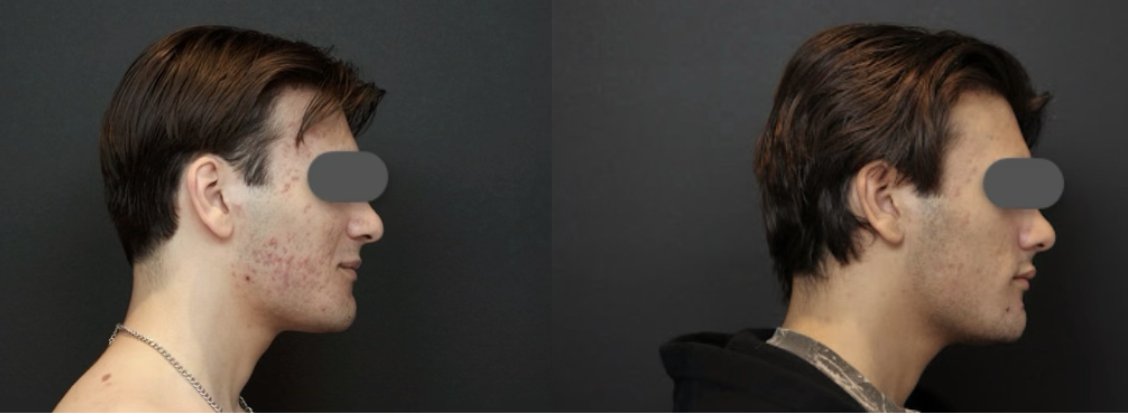
Dual-wavelength treatments (69%) achieved the most notable clinical responses, with reported improvement in pigmentation (50%), texture (60%), and scarring (40%). Procedures were well tolerated, frequently performed without anesthesia. The continuous 1927 nm mode allowed smoother, faster coverage of large treatment areas and reduced operator fatigue while maintaining safety and predictable recovery.
Conclusion:
This novel, solid-state, disposable-free 1550/1927 nm dual-wavelength fractional laser demonstrated safe, effective, and efficient performance across multiple indications, including facial rejuvenation and acne-related conditions. Its customizable pattern geometry and continuous energy delivery represent a significant evolution in fractional resurfacing technology, offering improved versatility, treatment uniformity, and sustainability without compromising clinical outcomes.
Downloads
Published
Issue
Section
License
Copyright (c) 2026 Paulina Decker, B.S., Harib Ezaldein, M.D., Miesha Merati, D.O. (Author)

This work is licensed under a Creative Commons Attribution-NonCommercial-NoDerivatives 4.0 International License.
Authors of all original research published in the Journal of Skin Cancers, Conditions, Aesthetics, and Reconstructive Surgery (JSCARS) retain full copyright in their articles while licensing the journal to publish the content as the original venue of publication. To maximize global impact, all articles are made available immediately and permanently free to access online under a Platinum Open Access model, permitting any user to read, download, copy, distribute, print, search, or link to the full texts, crawl them for indexing, or pass them as data to software for any other lawful purpose. Permitted reuse is defined by the Creative Commons Attribution 4.0 International (CC BY 4.0) license, which lets others distribute, copy, remix, transform, and build upon the work—including for commercial purposes and the creation of derivative works such as translations or anthologies—as long as they provide proper credit to the original author(s) and JSCARS, link to the license, do not suggest endorsement by the author, and do not modify the article in a manner that damages the author's honor or professional reputation. Digital production and global discoverability support for JSCARS are provided by Open Journal Systems (OJS).


